
Case Studies
Case List
- CBN First Financial G01 Studio Network Management System
- Mianyang Radio and Television facility-wide monitoring system
- Guangdong Radio and Television (GRT) intelligent Master Control Room (MCR) --- visual matrix switching system
- Nanjing TV studio source naming system
- Sichuan satellite uplink vehicle satellite system monitoring
- Sichuan TV facility-wide Tally system
- Xiamen TV HD OB Van system
- Yiwu TV Studio Complex UMD&Tally System
- Canxing (Shanghai Canxing Culture Media) 6-Channel Studio Compact Tally System
- Hunan TV integrated network management system
- CCTV new headquarters E14 studio complex monitoring system
- Five Star Sports Channel "Yi Qi Shua Da Pai" Program iStudio System


Guangdong Radio and Television (GRT) intelligent Master Control Room (MCR) --- visual matrix switching system
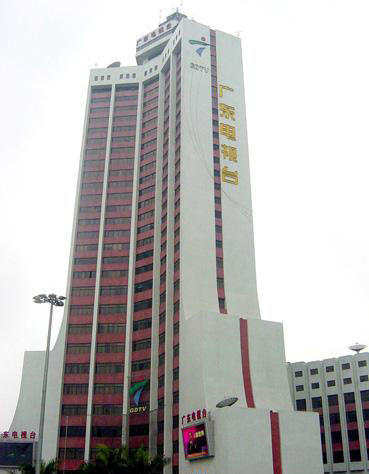
Guangdong Radio and Television (GRT)
1. Project Overview
In the early 1990s, the Guangdong Television Center was completed and put into operation, with the Guangdong Radio and Television (GRT) analog Master Control Room (MCR) system taking on the signal scheduling responsibilities for the entire station. In the early 2000s, leveraging the 9th National Games, the station carried out partial digital upgrades to the MCR, forming a technical architecture centered on a single digital main matrix as the scheduling hub combined with several smaller analog matrices. In recent years, with the rapid growth of station operations, the widespread adoption of HD and network information technologies, and higher requirements for broadcast safety, the existing MCR system can no longer meet development needs. A complete redesign and construction of a new intelligent, high-technology Master Control Room (MCR) system to support GRT's growth has become an urgent priority.
Based on the actual needs of Guangdong Radio and Television (GRT), our company provided the design and integration work for the new Master Control Room (MCR) system.
The Master Control Room (MCR) system is the convergence point for signals and data both inside and outside the station. Internally, it is closely connected with the playout system, production department, news center, and drama center. Externally, it is tightly linked with network companies, telecommunications providers, transmitter stations, microwave master stations, and satellite earth stations. Properly handling the transmission, interconnection, switching, and processing of signals and data between internal and external systems is the key technical challenge in system design and the critical focus of this MCR system.
2. System Composition and Application
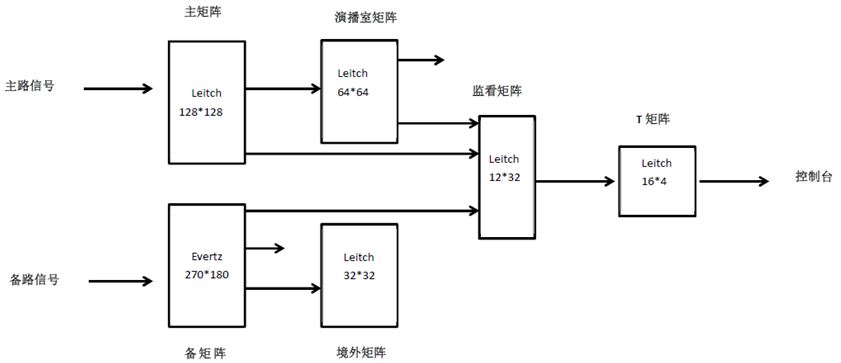 Figure 1: MCR System Composition and Application
The Master Control Room (MCR) is the central hub for signal and media data processing, transmission, and switching across the entire station. The core equipment enabling this function is the matrix. The system includes core matrices, function matrices, and IF matrices.
The core matrix uses a primary/backup dual-matrix architecture. The primary core matrix uses a Leitch 128*128, and the backup core matrix uses an Evertz 270*180. The primary and backup signals of the same source are connected to the primary and backup core matrices respectively, ensuring normal MCR operation when a single core matrix fails or undergoes maintenance, thus achieving a higher safety level.
Function matrices include studio matrices, monitoring matrices, T matrices, and an independent international matrix. The monitoring matrix is used for internal monitoring of signals sent to studios and the playout center. The T matrix is used for technical monitoring at three control consoles. The international matrix specifically handles certain international program sources. It is an independent matrix with no connection to other matrices, ensuring broadcast safety.
3. Current Matrix Types in the MCR:
Leitch matrices, e.g.: Platinum, Panacea, Integrator
Evertz matrices, e.g.: EQX matrix
Quintech IF matrix, e.g.: Quintech XRM 2250
4. Matrix Visual Switching Features
The Guangdong Radio and Television (GRT) matrix visualization software is a video-wall signal scheduling application. Its primary value lies in addressing the scheduling demands of complex signal chains, multiple matrices, and multi-tier systems.
Its main functions include:
1. Visual Switching
Simulates the video wall layout, enabling source switching via drag-and-drop with WYSIWYG source changes.
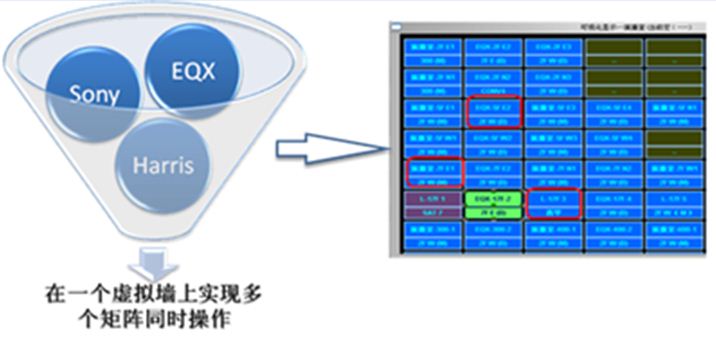 Figure 2: Operating Multiple Matrices on a Single Virtual Wall
2. Customizable Port Protection
To prevent the impact and losses caused by accidental switching, the system supports port protection. Protection can be applied both at the software interface and on the matrix panel to prevent misoperation.
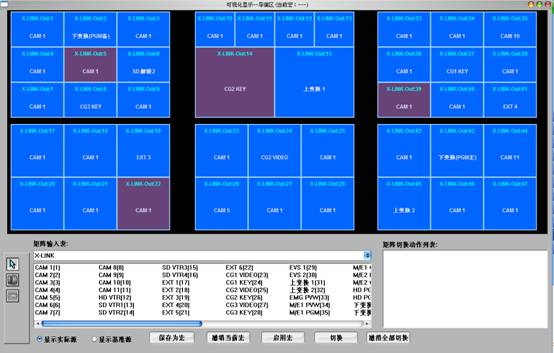 Figure 3: Matrix Output Port Protection
3. Video Tracking
One-click video monitoring allows users to click a monitoring area on the visual video wall to view the source signal on the monitor at the corresponding operator workstation. When an area is clicked on the virtual video wall, the TV signal of that area, in addition to normal transmission, is immediately switched to the monitor and TEKTRONIX waveform monitor at the operator's workstation for inspection. Every workstation has this capability.
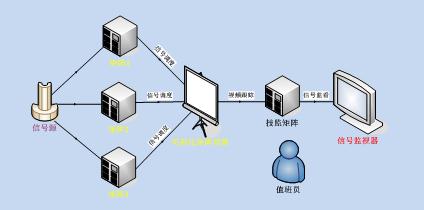
Figure 4: One-Click Video Monitoring
4. Multi-Scene Switching
Before production, possible layouts can be prepared in advance to form system node snapshots. Different system node snapshots can be switched via macro scheduling. During production, different macros can be activated for scheduling signals to achieve the required production scenario. Scene switching is completed with a single click.
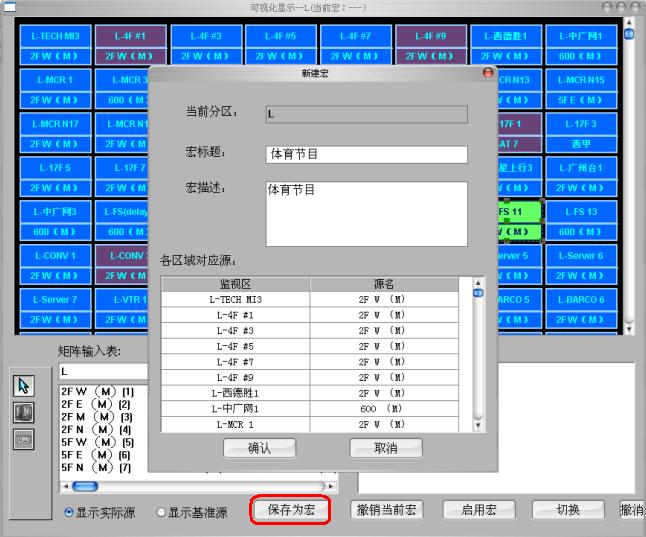 Figure 5: Macro Switching
5. Results
The entire project integration began in June 2008 and was put into operation in July of the same year. The system has proven safe, reliable, and flexible to operate, successfully supporting Guangdong Radio and Television (GRT) during the heavy workload of the Beijing Olympic Games, and received unanimous praise from the station.